Guide · Labels and the INCI list
How to read a cosmetic label in 5 minutes
The ingredient list (INCI) is the same on every label in the world and follows fixed rules. With three rules and a dozen names you can tell what a product really contains — and whether it deserves a spot on your shelf.
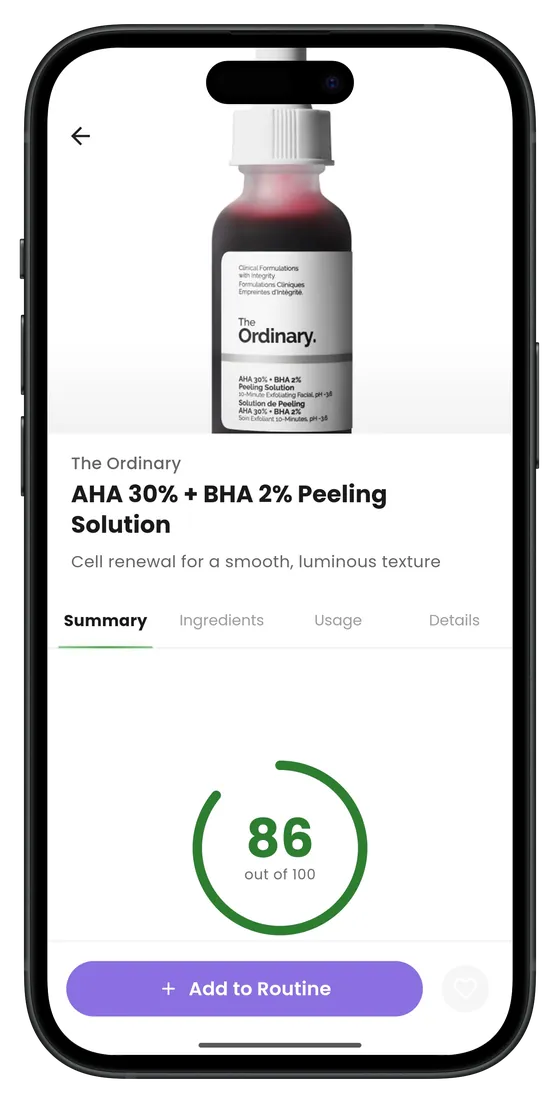
What the INCI list is
A universal language
INCI (International Nomenclature of Cosmetic Ingredients) is the standardized naming system used to declare cosmetic ingredients in the EU, the US, Latin America and most of the world. Plants are named in Latin, everything else in English, and the list is ordered from highest to lowest concentration.
Latin and English
Aqua is water, Butyrospermum Parkii Butter is shea butter, Sodium Hyaluronate is hyaluronic acid. It sounds like chemistry because it's the same word in every language.
Mandatory and complete
Everything in the product has to be on the list. What isn't on the label isn't in the jar — whatever the front of the box says.
The same in every country
The same list in London, New York or Sydney. Learn to read it once and it works for any product you buy anywhere.
Three rules that explain almost everything
With these three rules you can read 90% of a label without looking anything up.
Order is concentration
Ingredients are listed from highest to lowest amount. The first three to five are the real product; a star active at the end of the list is barely there, whatever the packaging claims.
The 1% line
Below roughly 1%, the brand can order ingredients however it likes. Look for the first preservative (Phenoxyethanol, Sodium Benzoate) or the fragrance: they usually mark where that zone begins.
The end is preservation, scent and color
Preservatives, Parfum and colorants (CI 77491…) close almost every list. Being at the end is normal; fragrance halfway up the list is a different story.
The symbols on the packaging
Four icons you see on every cosmetic and almost nobody can read.
Open jar "12M"
Period after opening (PAO): the months a product stays good once opened. 6M on an eye cream, 12M on a moisturizer, 36M on a shampoo.
Hourglass
Shown when a product lasts less than 30 months unopened. It comes with an expiry date: use it before then.
The "℮" next to the weight
Estimated sign: the manufacturer guarantees the package contains, on average, what it says. A European measurement mark, not a quality one.
Triangle of arrows
Indicates the packaging material and its recyclability. It says nothing about the formula: a recyclable bottle can hold a product that isn't right for you.
Words that mislead
The front of the box is marketing. The INCI list is the formula.
"Hypoallergenic"
There is no single legal definition. It means "less likely to cause an allergy", not "impossible". Check for Parfum and declared allergens.
"Paraben-free"
Something has to preserve the product. Check which preservative replaces the parabens: Phenoxyethanol, Benzyl Alcohol, Sodium Benzoate…
"Natural" or "organic"
Natural doesn't mean gentle: essential oils, citrus and mint extracts irritate many sensitive skins. A lab-made ingredient can be better tolerated than one "from nature".
"Dermatologically tested"
It was tested on skin. It doesn't say with what result, on how many people, or whether your skin type was among them.
"Fragrance-free" vs "unscented"
Fragrance-free has no added perfume. Unscented may contain ingredients that mask the formula's own smell. Look for Parfum on the list and settle it.
"Non-comedogenic"
No mandatory test backs that claim. If your skin is oily or acne-prone, look for heavy oils and butters on the list (coconut, cocoa, Isopropyl Myristate).
Twelve ingredients worth recognizing
The ones you'll see most on a label, who they tend to suit, and when to look twice.
| Ingredient | What it is | Usually suits | Look twice if… |
|---|---|---|---|
| Aqua | Water. Almost always first: the base of most formulas. | All skin types | Nothing to watch |
| Glycerin | The classic humectant: draws water into the skin. | All, especially dry | Nothing to watch |
| Niacinamide | Vitamin B3. Calms redness, regulates oil, strengthens the barrier. | Oily, combination, sensitive | Very high concentrations on reactive skin |
| Sodium Hyaluronate | Salt of hyaluronic acid. Surface hydration. | All | It's at the end of the list: there's little of it |
| Retinol | Vitamin A. Cell renewal, wrinkles and acne. | Mature, oily (with adaptation) | Pregnancy, sensitive skin, sun without SPF |
| Salicylic Acid | BHA. Exfoliates inside the pore. | Oily, acne-prone | Dry or irritated skin; combining with retinol |
| Alcohol Denat. | A drying alcohol. Gives a light feel. | Oily, in low doses | Dry or sensitive skin if it's near the top |
| Cetearyl Alcohol | A fatty alcohol: emollient, not drying. Don't confuse it with the one above. | All | Nothing to watch |
| Parfum / Fragrance | Added perfume. The most common trigger on reactive skin. | Tolerant normal skin | Sensitive, rosacea, dermatitis |
| Cocos Nucifera Oil | Coconut oil. Very nourishing; highly comedogenic. | Dry skin, body, hair | Oily or acne-prone skin, on the face |
| Dimethicone | A silicone. Silky texture and a protective barrier. | All | If you prefer silicone-free formulas |
| Phenoxyethanol | A common preservative. Usually marks the 1% line. | All | Rare reactions on very sensitive skin |
Let's read a real label
A typical pharmacy moisturizer. This is its INCI list, exactly as printed on the box:
Aqua, Glycerin, Caprylic/Capric Triglyceride, Niacinamide, Cetearyl Alcohol, Dimethicone, Butyrospermum Parkii Butter, Phenoxyethanol, Parfum, Tocopherol, Sodium Hyaluronate, Citric Acid
What it really is
Water, glycerin and a light triglyceride: a simple moisturizer. Niacinamide in fourth place is at a useful level — it's the real active in the formula.
Where the 1% begins
Phenoxyethanol marks the line. Fragrance, vitamin E and hyaluronic acid sit below it: the hyaluronic is on the label, but barely in the jar.
The verdict changes with your skin
Dry skin: great. Sensitive skin: the fragrance, though low, is the only risk. Oily, acne-prone skin: shea butter in seventh place may weigh in. That is exactly what the scanner weights per profile.
Rather have the app read it? Photograph the label and you get this analysis, for your skin, in seconds.
FAQ
Yes. The INCI list is ordered from highest to lowest concentration down to 1%; below that line the manufacturer can order them freely. That's why the first five ingredients define the product and the last ones are usually preservatives, fragrance and colorants.
International Nomenclature of Cosmetic Ingredients: the standardized naming system used to declare cosmetic ingredients in the EU, the US, Latin America and most countries. Plant ingredients are named in Latin and the rest in English.
There's no official test or mandatory label. In practice, watch for heavy oils and butters (coconut, cocoa, wheat germ), Isopropyl Myristate and waxes, especially in the first half of the list if your skin is oily or acne-prone. MyGlowApp detects them and weights them for your skin type.
Yes. MyGlowApp photographs the INCI list of any cosmetic — no barcode, no database — and gives you a 0–100 verdict for your skin type, flagging comedogenics, drying alcohols, fragrance and conflicts with your routine. Scanning your first products is free.
MyGlowApp
Or let the app read it for you
Photograph the label: the AI reads the full INCI list and tells you whether that product suits your skin.
Free for 7 days · then $34.99/year (or the equivalent in your local currency)
4.6 ★ store rating✦No commitment✦GDPR✦Made in Europe